
Tarp Guard journal
Pet Safety During Severe Weather: How to Keep Your Furry Family Calm, Safe, and Protected
10/12/2026
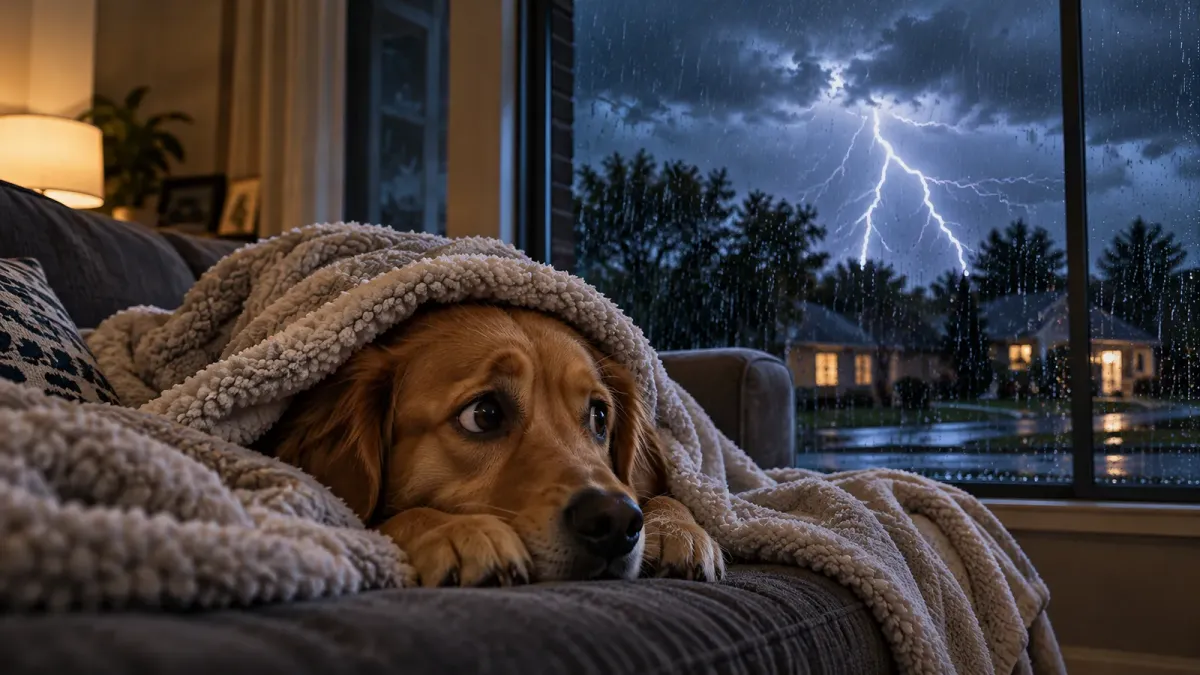
When thunder rolls in, hail starts hitting the windows, or winter damage knocks out the power, most of us know what to do. Our pets don't. Dogs pace, cats disappear under the bed, and birds and small animals can get stressed by even small changes in pressure and noise.
The good news is that a little planning goes a long way. Whether you live in tornado country, the hail belt, along the coast, or somewhere that sees severe summer damage, the same simple steps keep your pets calmer and safer before, during, and after severe weather.
At Tarp Guard, our whole approach is built on one idea: your home is fine today, and that's exactly when you should have a plan. That goes for the four-legged members of your household, too.
Before Damage Occurs: Build Your Pet's Plan
The best time to prepare is on a calm, sunny day. Here's what to put in place now.
1. Make sure your pet can be identified
Pets that get spooked while damage is occurring can slip out of an open door or through a damaged fence. Make sure every pet wears a collar with a current ID tag. If your pet is microchipped, check that the registration has your current phone number and address. Keep a recent photo of each pet on your phone, ideally one that shows any unique markings.
2. Pack a pet emergency kit
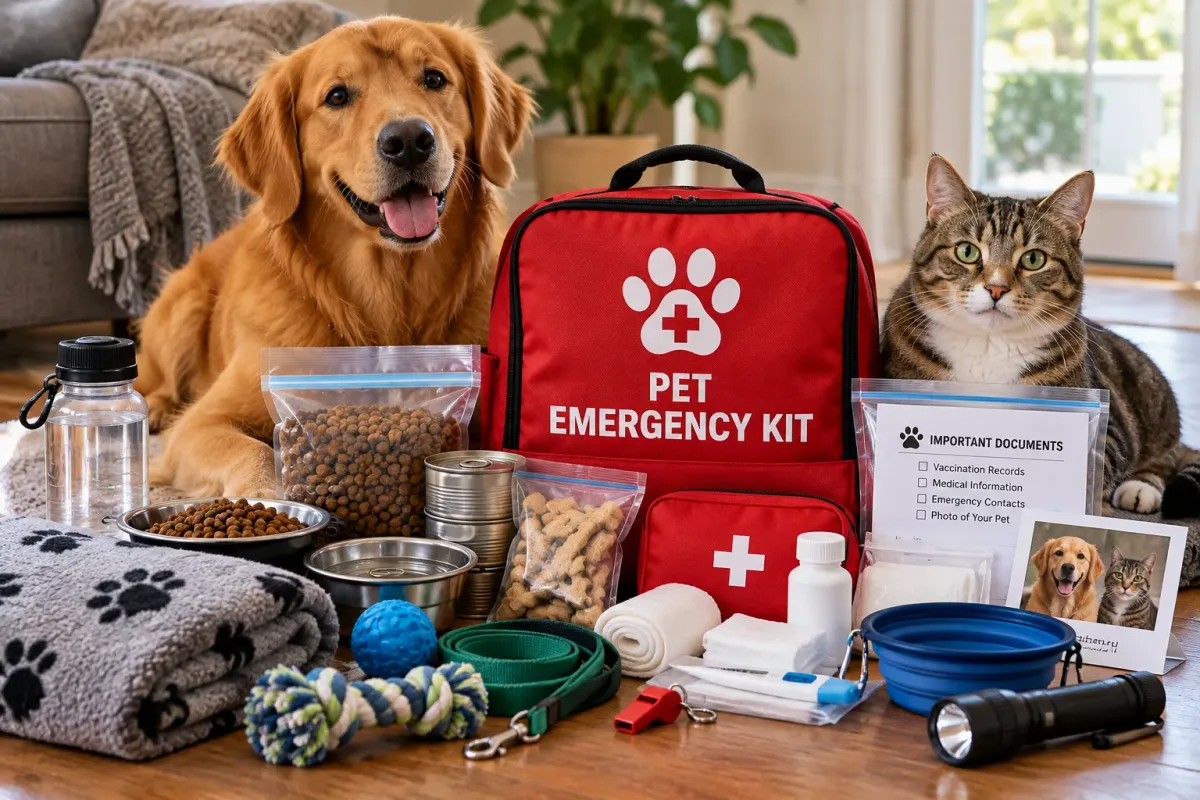
Keep a grab-and-go bin or bag somewhere easy to reach. A good kit includes:
- At least a week's worth of food and bottled water for each pet, rotated every couple of months so it stays fresh
- Food and water bowls, plus a manual can opener if you use canned food
- Any medications, with written dosing instructions
- Copies of vaccination and medical records in a waterproof bag
- A sturdy leash, harness, and a carrier or crate for each pet
- Litter, a litter pan, waste bags, and paper towels
- A familiar blanket or toy for comfort
- Your veterinarian's contact information
**
**
3. Choose a safe room
Pick an interior room on the lowest floor of your home, away from windows and skylights. A bathroom, laundry room, or interior closet often works well. Let your pets spend some calm time there before seasonal damage occurs, so it feels familiar rather than scary when you need it.
4. Practice with the carrier
Many pets only see their carrier on the way to the vet. Leave it out with a soft blanket and an occasional treat inside so your pet learns it's a safe space. If you ever need to move quickly, you'll be glad they walk in on their own.
5. Know where you would go
If local officials ever ask your area to evacuate, not every shelter or hotel accepts animals. Make a short list now of pet-friendly hotels, boarding facilities, and friends or family outside your area who could take you and your pets in. Never leave pets behind if you leave home because of damage.
While Damage Is Occurring: Keep Them Inside, Close, and Calm
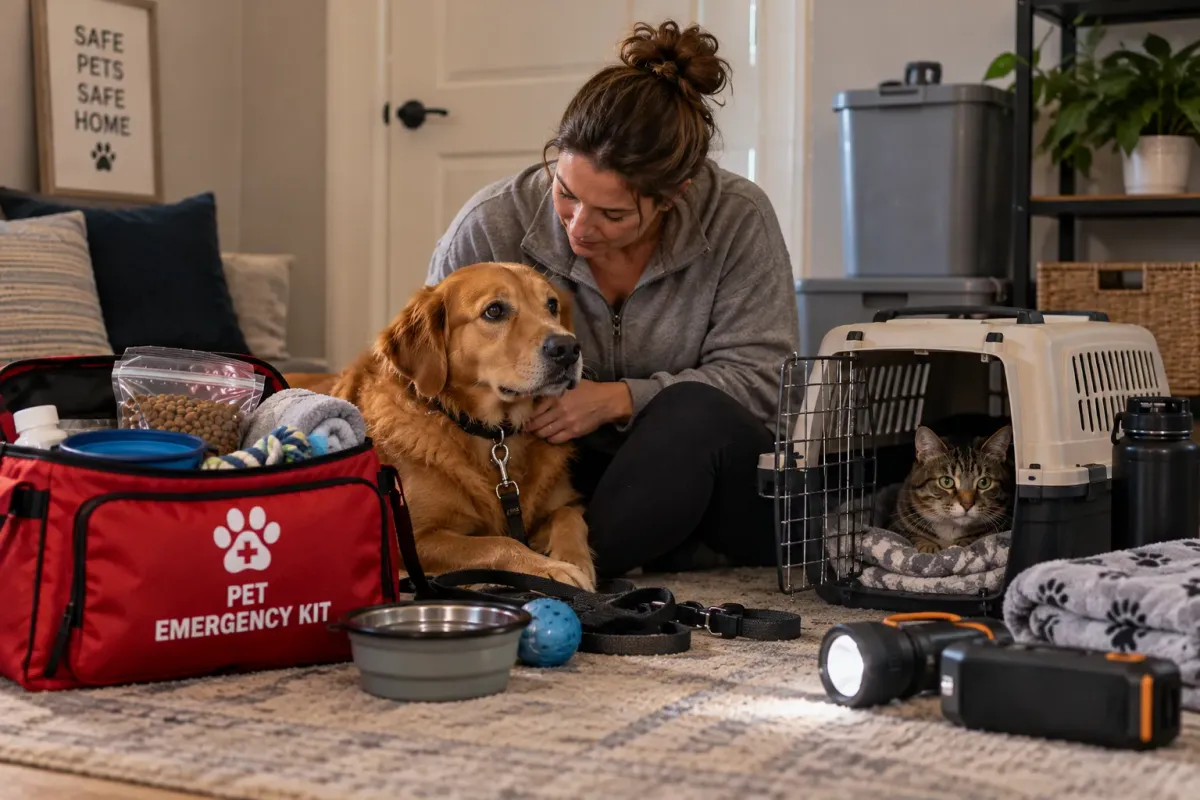
When a watch or warning is issued, bring every pet indoors early, before the wind and rain arrive. Animals often sense conditions that may cause damage and may hide outdoors, which makes them hard to find once conditions turn dangerous.
- Head to your safe room together. Bring their carrier, kit, and a favorite blanket.
- Keep dogs leashed and cats crated if you have to move around. A sudden crack of thunder or a tree limb hitting the house can send a frightened pet bolting.
- Stay calm yourself. Pets read your energy. A steady voice and normal routines like a regular meal time help more than you might think.
- Use background noise. A fan, soft music, or white noise can help muffle thunder and hail.
- Talk to your vet ahead of time about severe anxiety. If your pet panics when damage occurs, your veterinarian can suggest options, from calming wraps to other approaches suited to your pet.
If the power goes out, keep a flashlight in the safe room so you can check on everyone without stumbling around in the dark.
After Damage Occurs: Check the Yard, the House, and the Roof Overhead
The hours after damage occurs can be the riskiest time for pets. The weather has calmed down, but the yard and the house may not be safe yet.
Walk the yard before your pets do
Check your yard on your own first, and keep dogs on a leash for the first few outings. Look for:
- Downed power lines, which can be dangerous even when they look harmless. Stay far away and report them to your utility.
- Broken glass, nails, shingles, and sharp debris
- Gaps or damage in fences and gates
- Standing water, which can hide hazards or be contaminated
- Snakes, wildlife, or stray animals that were displaced by damage
Watch for damage inside the home
Roof damage doesn't always announce itself. Wind can lift shingles, hail can crack them, and a falling limb can open a hole you can't see from the ground. When water gets in, it can soak insulation, drip onto floors, and leave wet spots that pets will happily walk through or drink from.
If you notice ceiling stains, dripping water, or a musty smell, keep pets out of that area. Move their bed, food, and litter box to a dry room. Wet drywall, loose debris, and slick floors are easy for a curious pet to get into.
Keep pets away from the work area
If a professional comes to cover a damaged roof, keep your pets inside a closed room while the work is happening. Ladders, tools, falling debris, and unfamiliar people on your property are a stressful mix for animals. A quiet room with their bed and a toy keeps everyone safer, and it lets the crew focus on protecting your home.
Give them time to settle
Some pets bounce back right away. Others stay jumpy for a day or two. Stick to familiar routines, offer extra comfort, and watch for anything unusual like limping, cuts, or changes in eating. Call your veterinarian if something doesn't seem right.
A Plan for Your Pets, and a Plan for Your Roof
Taking care of pets after damage occurs is stressful enough. Figuring out who to call about a damaged roof shouldn't add to it.
Tarp Guard is a membership that helps homeowners get ready before roof damage happens. If damage occurs to your roof from a falling limb or other event, members can request Priority Dispatch, which gives them priority access to our network of local certified partners for temporary emergency roof protection. That lets you stay focused on the people and pets who count on you.
Membership becomes active 30 days after you join, so the best time to sign up is now, while your roof is fine and the skies are clear.
Be Prepared. Stay Protected.
Join Tarp Guard today and put your plan in place before the next damage occurs.