
Tarp Guard journal
The Hidden Damage a Storm Can Cause to Your Roof
9/18/2026
A storm moves through your neighborhood.
The next morning, you step outside and take a look at your home.
No trees have fallen on the roof. There aren't shingles scattered across the driveway. You don't see a hole in the ceiling.
Everything looks fine.
But is it?
Not all storm damage is dramatic—or even immediately visible.
High winds, hail, heavy rain and severe thunderstorms can affect a roof in ways that may be difficult to recognize from the ground. And sometimes, the first noticeable sign of a problem doesn't appear until the next rainstorm.
Knowing what to look for after severe weather can help homeowners identify potential problems earlier and determine when it's time to call a professional.

Storm Damage Doesn't Always Look Like a Disaster
When most people imagine storm-related roof damage, they picture something dramatic: a tree through the roof, large sections of missing shingles or visible structural damage.
Those situations certainly happen.
But storms can also cause much more subtle problems.
Wind can lift or loosen roofing materials without completely removing them. Hail can impact shingles without creating an obvious hole. Flashing around roof penetrations can be affected. Gutters and other exterior components can also sustain damage.
From the driveway, you might not notice anything unusual.
That's why it's important to pay attention to your home after significant severe weather—even when everything appears normal at first glance.
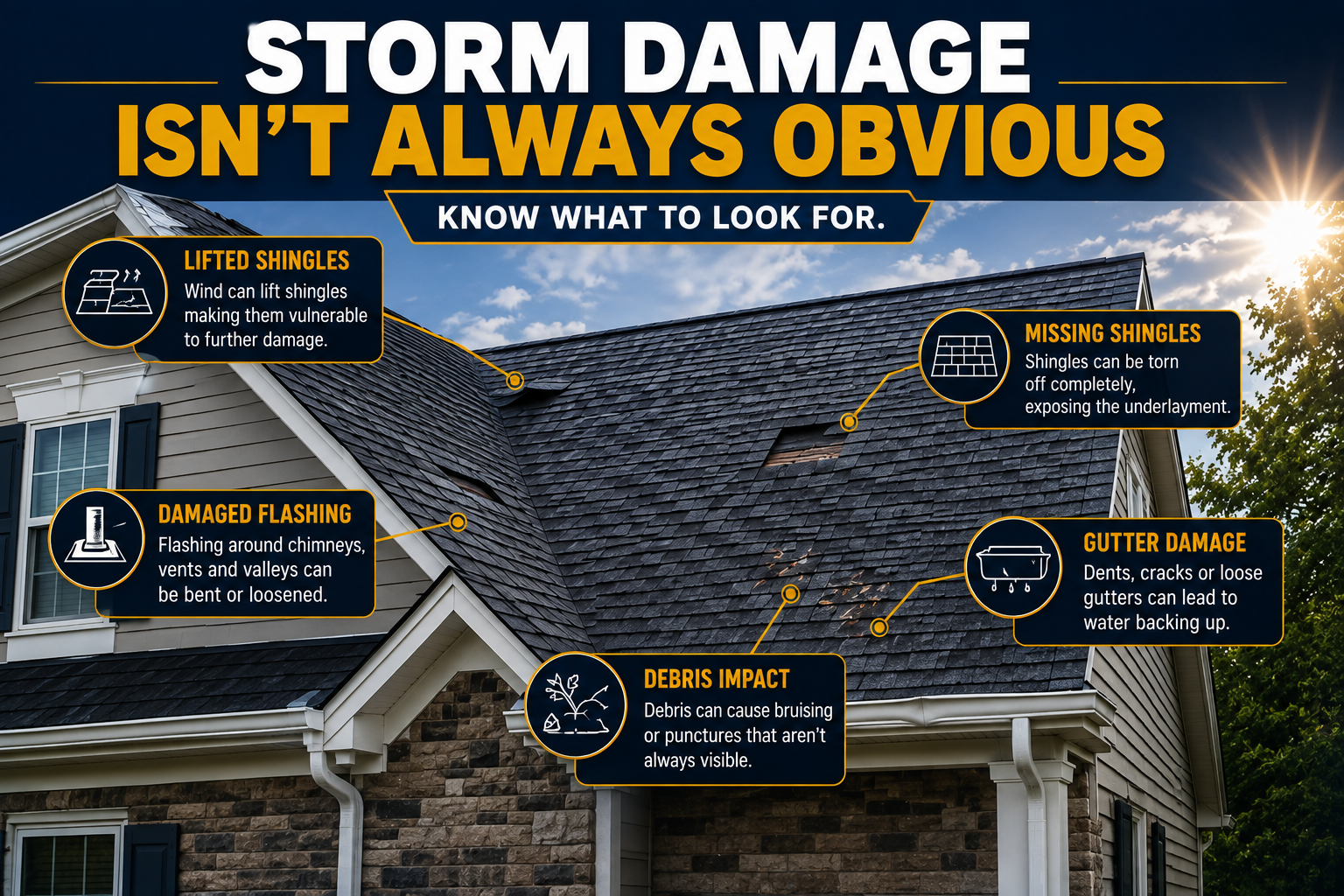
1. Missing, Lifted or Loose Shingles
Strong winds don't necessarily have to tear shingles completely from your roof to cause a problem.
Wind can potentially lift or loosen roofing materials, especially around edges, ridges and other vulnerable areas.
A shingle may even settle back into position after the storm, making the problem difficult to see from the ground.
After severe weather, safely look at your roof from ground level.
Watch for obvious changes in the roofline, shingles that appear out of place, exposed areas or roofing material that has landed in the yard.
And remember: never climb onto a storm-damaged roof to investigate it yourself.
2. Hail Damage Can Be Difficult to Recognize
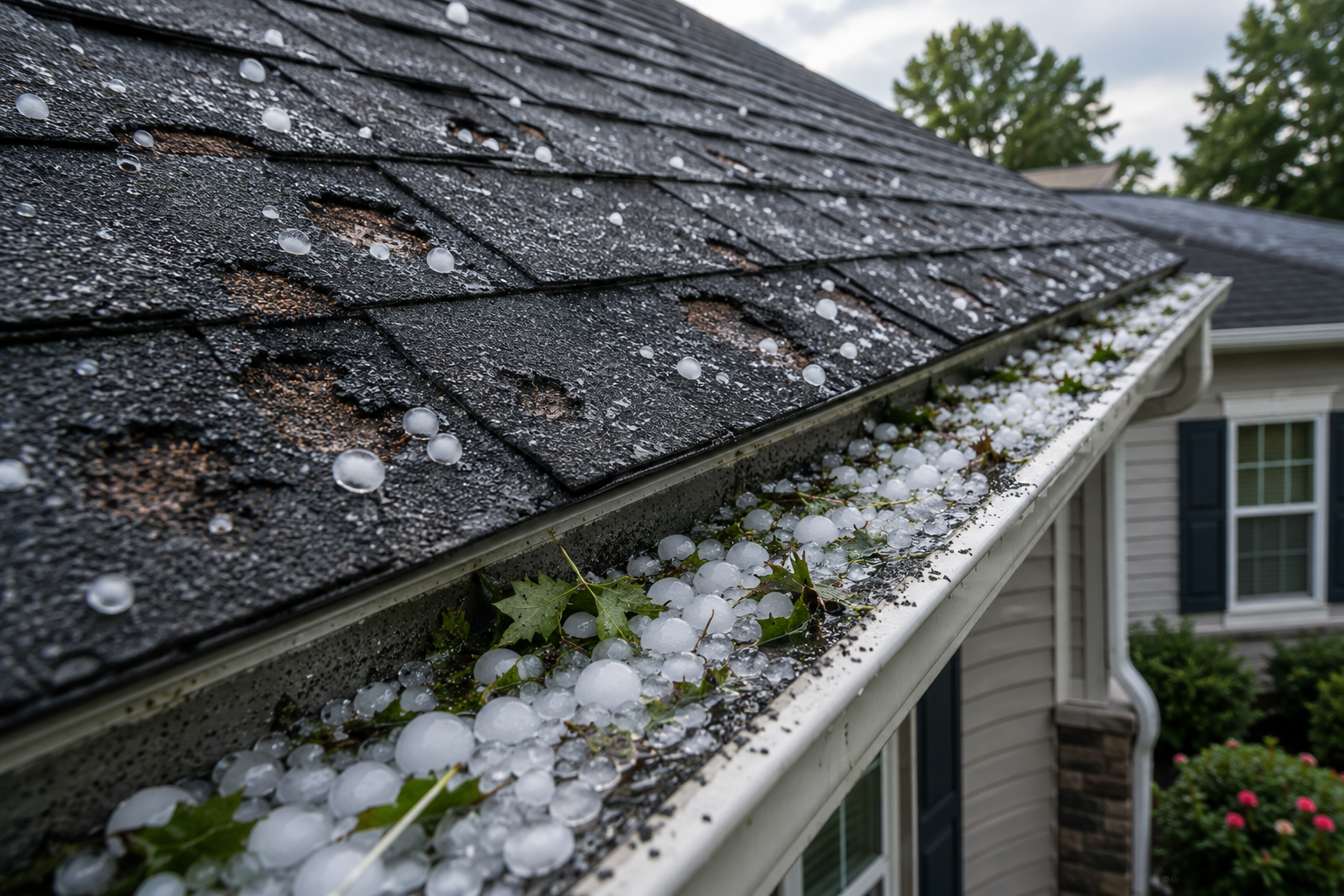
Hail doesn't have to break through your roof to potentially cause damage.
Depending on the size of the hail, wind conditions, roofing material and other factors, hail impacts may affect shingles and other exterior components.
From the ground, these areas may be extremely difficult—or impossible—for a homeowner to identify.
There may be other clues around your property, however.
Damage to gutters, downspouts, siding, screens, outdoor furniture or vehicles can indicate that your property experienced significant hail.
If you're concerned about possible roof damage after a hailstorm, consider having the roof evaluated by an appropriate professional rather than attempting to inspect it yourself.
3. Flashing and Roof Penetrations Can Be Vulnerable
Some of the most important parts of your roofing system aren't the large open areas of shingles.
They're the places where different materials and surfaces meet.
Areas around chimneys, vents, skylights and other roof penetrations often rely on flashing and seals to help keep water out.
Strong winds, flying debris and other storm conditions can potentially affect these areas.
A small problem around one of these locations may not be noticeable from your driveway.
The first clue might appear inside your home.
4. Your First Warning Sign Might Be Inside the House
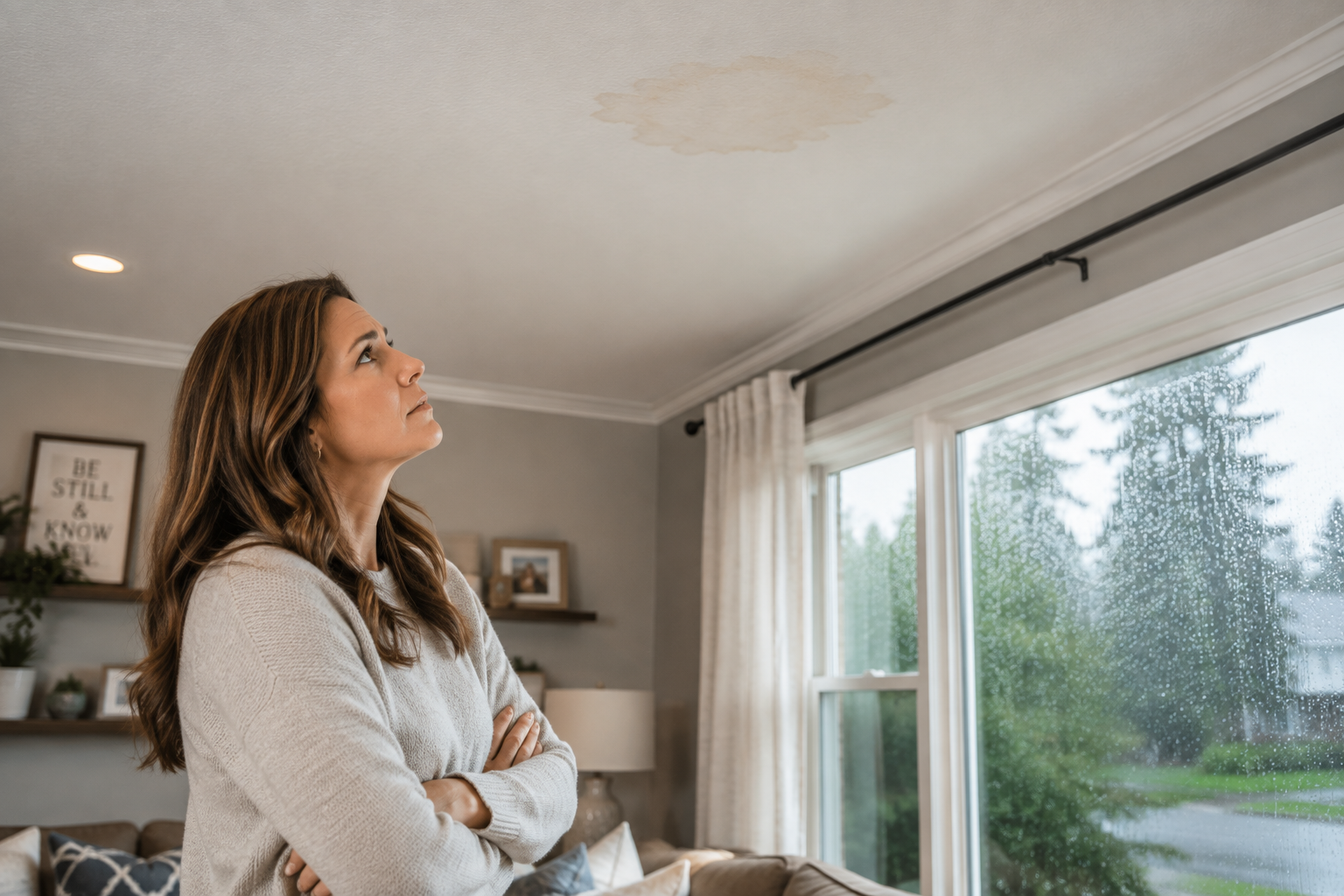
Sometimes your ceiling tells you there's a roof problem before your roof does.
After a major storm—and particularly after additional rainfall—pay attention to changes inside your home.
Possible signs of water intrusion can include:
- New stains or discoloration on ceilings
- Damp areas on walls
- Dripping water
- Moisture in the attic
- Peeling or bubbling paint
- Unexplained damp or musty areas
A small ceiling stain shouldn't automatically be assumed to be storm-related roof damage. Plumbing, HVAC systems and other issues can also cause moisture inside a home.
But a new water-related problem appearing after severe weather is something worth investigating.
5. Gutters Can Provide Clues
Your gutters and downspouts may also show signs that your home experienced significant weather.
After a storm, safely look for visibly dented gutters, detached sections, unusual debris or other obvious changes.
You may also notice roofing material or granules near downspouts or around the property.
Some granule loss occurs naturally as asphalt shingles age, so finding granules doesn't automatically mean your roof has storm damage.
The important thing is recognizing changes and considering them alongside other signs around the property.
6. Falling Debris Can Cause Localized Damage
A storm doesn't need to damage your entire roof to create a problem.
Sometimes the damage is concentrated in one relatively small area.
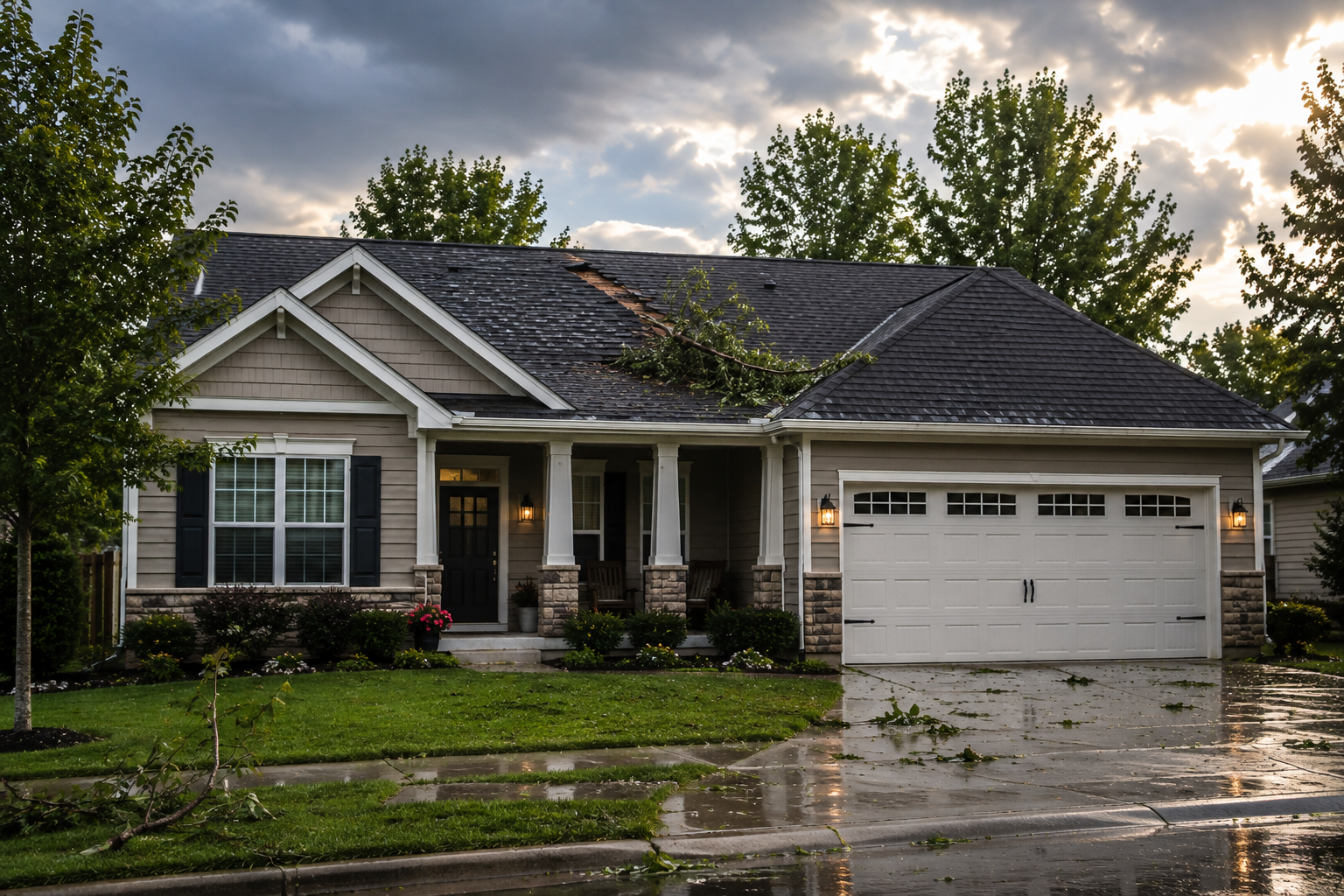
A falling tree limb or windblown debris can affect a specific section while the rest of the roof remains completely intact.
And localized damage matters because even a relatively small compromised area can potentially allow water into the home.
What Happens If Damage Is Found?
If you discover visible roof damage, your first priority should continue to be safety.
Don't climb onto the roof yourself.
Document visible damage from the ground when it is safe to do so. Contact your insurance company if appropriate for your situation and policy. And arrange for the damage to be professionally evaluated.
If the roof has been compromised, permanent repairs may not happen immediately—particularly when widespread storms have affected an entire community.
That's where temporary roof protection may become important.
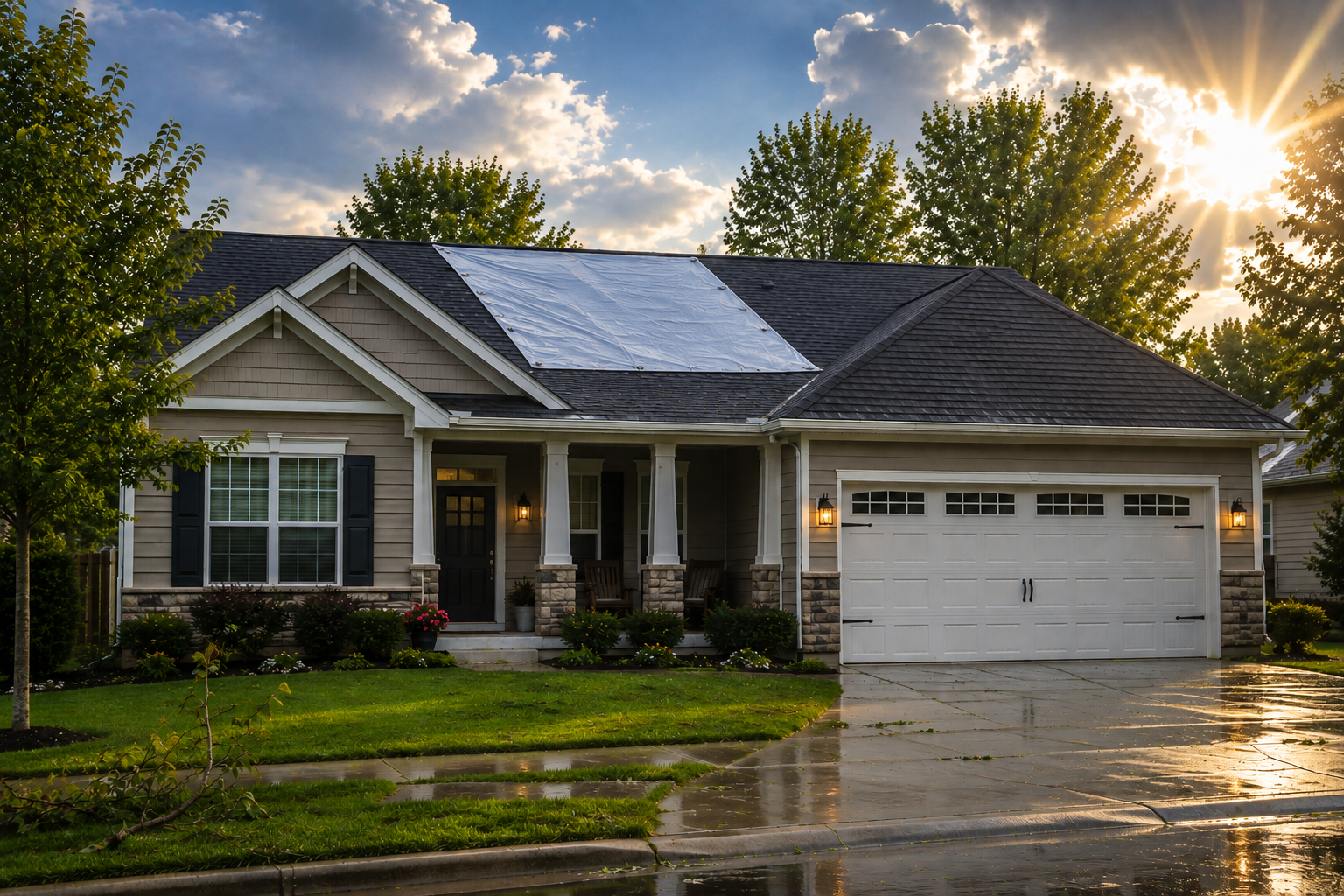
Professional temporary roof tarping can help protect a damaged area from additional weather exposure while permanent repairs are being arranged.
The tarp isn't the repair.
It's protection during the time between damage and repair.
Don't Assume You're in the Clear Just Because Your Roof Looks Fine
One of the most important things homeowners can remember after severe weather is simple:
Visible destruction isn't the only sign of storm damage.
A home can look perfectly normal from the street while still having an issue that deserves attention.
After significant severe weather, pay attention.
Look at your property safely from the ground.
Look for changes.
Check inside your home.
Document anything unusual.
And if you have concerns about your roof, have it evaluated by an appropriate professional.
Most importantly, don't wait until you're standing underneath a leaking ceiling to decide what you'll do if your roof is damaged.
Be Protection Ready™
Tarp Guard was created around the idea that homeowners should have a plan before storm damage happens.
Tarp Guard helps members prepare for the unexpected by connecting them with a network of vetted Certified Partners for professional temporary roof protection following qualifying storm damage.
Because when severe weather moves through your community, knowing what comes next can make all the difference.
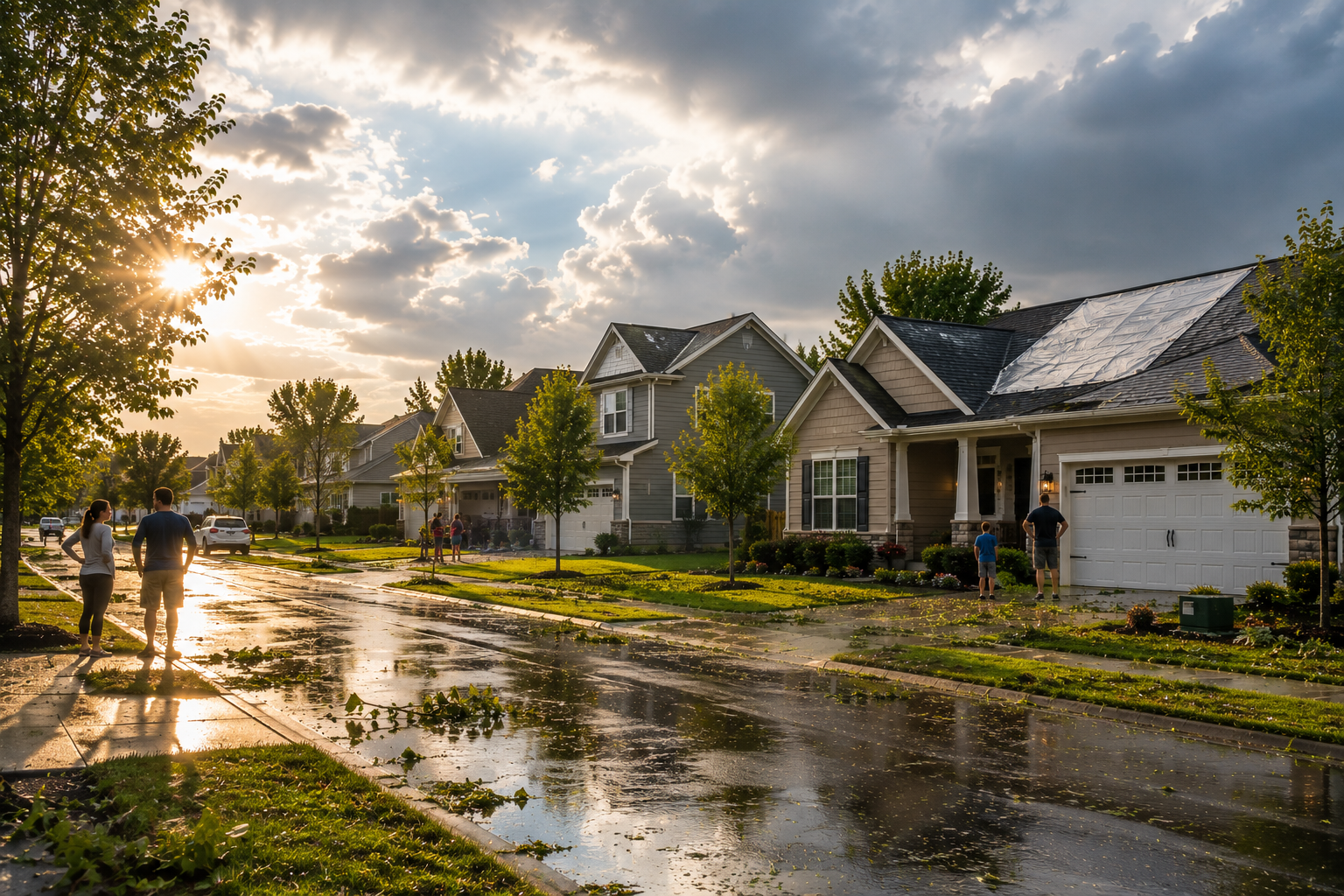
Prepare before the storm. Know what to look for afterward. Be Protection Ready.
Learn more at TarpGuard.us.